
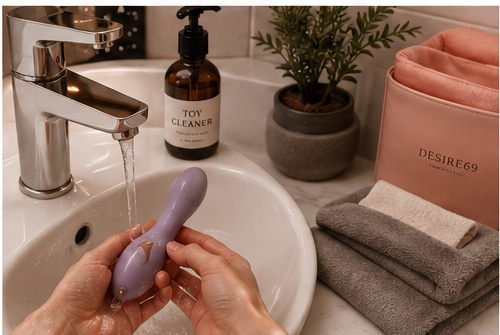
Cleaning and caring for intimate products isn’t glamorous, but it is one of the most important parts of owning them.
Proper care helps maintain hygiene, protects the product’s materials and can extend its useful life.
The exact cleaning method depends on the product, so the first rule is simple:
Always follow the manufacturer’s care instructions first.
Different materials and electronic designs require different treatment.
Clean Before and After Use
If a product is new, clean it according to the manufacturer’s instructions before its first use.
After use, cleaning helps remove bodily fluids, lubricant residue and other material that may remain on the surface.
A simple routine is often enough:
Clean → Rinse if appropriate → Dry completely → Store properly
Don’t leave a product wet inside a closed pouch or container.
Identify the Material First
The material determines how a product should be cleaned.
Silicone
Non-porous silicone is commonly used for intimate products and is generally straightforward to clean.
For water-safe products, warm water and a mild, fragrance-free soap or an appropriate product cleaner can often be used.
Glass
Glass products can generally be cleaned thoroughly, but always check the manufacturer’s instructions and inspect the product for chips or cracks before use.
Stainless Steel
Stainless steel is also relatively easy to clean when the product is designed for intimate use and has appropriate construction.
ABS Plastic
ABS plastic products are generally cleaned with warm water and mild soap when the product’s instructions allow it.
Electronic components should not be submerged unless the product is specifically designed to be waterproof.
TPE and Other Softer Materials
Some softer materials can be more porous and may require more careful cleaning and storage.
Follow the manufacturer’s specific instructions rather than applying the same cleaning routine to every product.
Water-Safe Does Not Mean “Anything Goes”
This is an important distinction.
A product may be water-resistant without being designed for immersion.
Look for the manufacturer’s stated rating or instructions.
If you’re uncertain, keep water away from charging ports, switches and electronic components and use a damp cloth or appropriate cleaning method instead.
A Simple Cleaning Routine
For a water-safe product:
Step 1: Rinse
Use warm water to remove surface residue.
Step 2: Clean
Use a mild, fragrance-free soap or a cleaner specifically intended for intimate products.
Step 3: Rinse Thoroughly
Remove all traces of soap or cleaner.
Step 4: Dry Completely
Pat dry with a clean, lint-free cloth or allow the product to air dry completely.
Step 5: Store
Once completely dry, place the product somewhere clean and dry.
Avoid Harsh Chemicals
Household disinfectants aren’t automatically suitable for intimate products.
Avoid using aggressive chemicals, abrasive cleaners or products that could damage the material unless the manufacturer specifically recommends them.
Alcohol-based cleaners should also not be used indiscriminately.
The goal is to clean the product without damaging its surface or irritating the skin.
Be Careful With Electronic Products
Electronic products require additional care.
Never assume that because a product looks sealed, it can be submerged.
Pay attention to:
- Charging ports
- USB connections
- Battery compartments
- Buttons
- Seams
- Control panels
If the product isn’t explicitly designed to be submerged, keep these areas dry.
For rechargeable products, follow the manufacturer’s charging instructions and make sure the product is dry before charging when required by the manufacturer.
Drying Is Just as Important as Cleaning
A surprisingly common mistake is putting a product away while it is still damp.
Moisture trapped in a closed container can create an environment where unwanted buildup can occur.
After cleaning:
- Remove excess water.
- Dry with a clean cloth.
- Allow it to air dry if appropriate.
- Make sure it is completely dry before storage.
Don’t rush this step.
Store Products Separately
Storage matters because different materials can interact when they’re pressed against each other for long periods.
A dedicated storage pouch or the original packaging is useful.
Keep products:
- Clean
- Dry
- Away from direct sunlight
- Away from excessive heat
- Separately stored where appropriate
If a product comes with a dedicated storage pouch, use it.
Keep Cleaning Products Appropriate
Not every lubricant or cleaner works with every material.
For example, silicone-based lubricants may not be suitable for some silicone products because prolonged contact can potentially affect the material.
If you’re unsure about compatibility, check the manufacturer’s guidance.
Water-based lubricants are often a simpler choice when compatibility is uncertain, but the product instructions should take priority.
What About Sharing?
If products are shared between partners, hygiene becomes particularly important.
Clean the product thoroughly between users and follow the manufacturer’s instructions.
For products designed for internal use, consider appropriate barriers where suitable.
The exact approach depends on the product and intended use.
Inspect Products Regularly
Cleaning is also an opportunity to inspect the product.
Look for:
- Cracks
- Splits
- Damaged surfaces
- Loose components
- Discoloration
- Unusual stickiness
- Damaged charging cables
- Broken seals
If a product has significant damage, stop using it and follow the manufacturer’s replacement or warranty guidance.
What You Should Never Do
Avoid:
- Boiling a product unless the manufacturer explicitly says it is suitable
- Putting electronics underwater unless specifically designed for immersion
- Using abrasive cleaners
- Using harsh household chemicals
- Storing products while damp
- Ignoring cracks or damaged surfaces
- Mixing incompatible materials during storage
- Assuming every product has the same cleaning requirements
Create a Simple Care Habit
You don’t need a complicated cleaning ritual.
A good routine is simply:
Use → Clean → Dry → Store
Do it consistently and it becomes automatic.
For products you use regularly, keep your cleaning supplies somewhere convenient so that proper care doesn’t become an annoying extra task.
Final Takeaway
Good intimate-product care is mostly about consistency.
Follow the manufacturer’s instructions, clean appropriately, dry completely, store carefully and inspect the product regularly.
A few minutes of proper care can help keep the product hygienic, comfortable and in good condition.