
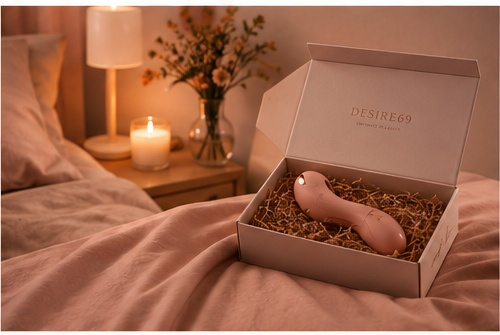
Choosing your first intimate product can be exciting, but it can also feel surprisingly confusing. There are different shapes, sizes, materials, functions, controls and price points, and product descriptions can sometimes make everything sound more complicated than it really is.
The good news is that you don’t need to understand every product on the market before making your first choice.
You simply need to understand what you want, what you’re comfortable with, and which features actually matter to you.
This guide will help you approach your first purchase calmly and confidently.
Start With Yourself, Not the Product
The easiest mistake for a first-time buyer is to start by browsing products without first thinking about what they want from the experience.
Instead, ask yourself a few simple questions.
Are you buying for personal exploration? Are you looking for something to use with a partner? Are you interested in external stimulation, internal use, or simply trying something new?
There isn’t a correct answer.
Your reason for buying will help determine which types of products make sense for you.
If you’re buying your first product, simplicity is usually more useful than having dozens of features. A product that is easy to understand and comfortable to use can provide a much better first experience than an advanced product with controls you don’t understand.
Understand the Main Product Types
Intimate products are designed for different purposes.
External stimulators
These are designed primarily for stimulation on external areas of the body. They can be a practical starting point for someone who wants to explore without introducing an internal product.
Internal products
These are designed for internal use and come in many different shapes and sizes. If you’re considering one, comfort, dimensions and material become especially important.
Couples’ products
Some products are designed specifically for use between partners. These can be useful when the goal is shared exploration rather than individual use.
Massage-style products
Some products are designed more broadly for massage or external stimulation. Their shape and intensity can vary considerably.
The important thing is not to choose based solely on the category name. Look at what the product is actually designed to do.
Choose Comfort Before Complexity
Your first product doesn’t need to be the most powerful, most expensive or most feature-packed option available.
Consider:
- Is the shape comfortable?
- Are the controls easy to understand?
- Can you adjust the intensity?
- Is the product easy to clean?
- Is the size appropriate for your comfort level?
- Does the product require batteries or charging?
- Is discretion important to you?
These questions are more useful than simply asking, “Which one is the best?”
There is no universal best product.
There is only the product that is best suited to a particular person and situation.
Pay Attention to Materials
Material deserves special attention.
Products made from clearly identified, non-porous materials are generally easier to clean and maintain. Silicone, glass and stainless steel are examples of materials commonly used in intimate products, although the exact characteristics depend on the specific product and manufacturer.
Some softer plastics and elastomer materials can be more porous and may require additional care.
Don’t rely on vague phrases such as “soft material” or “skin friendly” alone. When material information matters to you, look for a clear product specification.
Size and Shape Matter
A product that looks attractive in a photograph may not necessarily be comfortable for you.
Think about:
- Overall dimensions
- Shape
- Thickness
- Curvature
- Weight
- Handle or grip
- Controls
If you’re new to intimate products, a simpler and more manageable design can make the learning curve easier.
You can always explore different shapes and features later.
Don’t Ignore the Controls
Controls can make a surprisingly large difference.
A simple product may have one button and a few settings. Another may have multiple modes, patterns, remote controls or app-based functions.
More controls aren’t automatically better.
For a beginner, intuitive controls can be far more valuable than a long list of features.
If you’re likely to use a product in a relaxed environment, you don’t want to spend half the experience trying to remember which button does what.
Battery or Rechargeable?
Both options have advantages.
Battery-operated products can be convenient because replacement batteries are widely available and there is no charging time.
Rechargeable products eliminate the need to keep spare batteries around and can be convenient for regular use.
When choosing rechargeable products, consider charging time, charging method and how easy it is to keep the product charged.
Think About Noise and Discretion
If privacy matters to you, noise is worth considering before purchasing.
A product can be perfectly functional but still unsuitable for your environment if its operating sound makes you uncomfortable.
Also consider storage and packaging.
A discreet product is only part of the equation. You may also want a convenient place to store it privately.
What About Waterproofing?
Never assume that a product is waterproof simply because it looks sealed.
Look for the manufacturer’s stated water-resistance or waterproofing information.
This matters for both cleaning and use.
If the product contains electronics, follow the manufacturer’s instructions carefully and never immerse it unless the product is specifically designed for that purpose.
How Much Should You Spend?
You don’t need to spend a huge amount on your first product.
Instead of choosing based entirely on price, compare:
material + design + controls + intended use + cleaning requirements + warranty/support
A very inexpensive product isn’t necessarily a bargain if it doesn’t suit your needs.
Likewise, a premium price doesn’t automatically mean that a product is better for you.
Common First-Time Buying Mistakes
Buying because something is popular
Popularity doesn’t mean compatibility.
Choosing too many features
More features can mean more complexity.
Ignoring the material
Material affects cleaning, comfort and maintenance.
Forgetting about cleaning
Think about cleaning before buying, not after.
Assuming waterproof means completely waterproof
Always check the manufacturer’s specifications.
Buying without considering size
Photographs can make products appear smaller or larger than they actually are.
A Simple Beginner Checklist
Before clicking Add to Cart, ask:
- What do I want from the product?
- Is it designed for the type of use I have in mind?
- Am I comfortable with its size and shape?
- Is the material clearly identified?
- Are the controls easy enough for me?
- How is it powered?
- How will I clean it?
- How will I store it?
- Does the product provide the level of privacy I need?
If you can answer those questions comfortably, you’re already making a much more informed decision.
Final Takeaway
Your first intimate product doesn’t need to be the most advanced one.
Start with comfort, simplicity, clear product information and your own preferences.
Take your time. Explore gradually. And remember that choosing an intimate product is a personal decision, not a competition.
The right first product is the one that makes you feel comfortable, informed and confident about your choice.